The Client Just Changed the Brief. It’s 9pm. Here’s How LA Photo Party Handles It Without the Event Feeling It
It is two days before a large corporate event. The client has just updated the campaign branding. The approved output


Ten thousand badges scanned. Three days. One activation that has to work for every single one of them, from the first attendee at 8am on day one to the last one rushing through at 5pm on day three.
A photo booth for a large conference is not a bigger version of a photo booth for a small one. The math changes. The staffing changes. The hardware requirements change. LA Photo Party has built activations for conferences at this scale, and the difference between a plan that works and a plan that looks good on paper shows up in the first ninety minutes.
Here is what actually has to go right.
A photo activation at a 10,000-person conference is defined by throughput math before it is defined by creative concept. If the activation cannot process guests fast enough, the concept never gets a chance to matter.
Assume 30 percent of attendees engage with the activation across a three-day event. That is 3,000 interactions. Spread across three days and a realistic eight-hour engagement window per day, that is 125 guests per hour, or roughly two guests per minute, at a single station.
LA Photo Party builds the station count around that number, not around the budget line item for stations. One station handling two guests per minute creates a line. Two stations handling one guest per minute each do not. The math determines the build before the build determines the math.
A standard single-station Photo Booth setup, the kind that works perfectly at a 500-person event, becomes a bottleneck almost immediately at a 10,000-person conference. The line forms in the first hour and never fully clears.
LA Photo Party has found that a line longer than four minutes causes guests to walk away. At conference scale, a single under-built station does not just lose those guests. It creates a visible failure point in a high-visibility part of the venue, which reflects on the brand running the activation.
The fix is not a faster single station. It is multiple stations distributed across the venue footprint, positioned near high-traffic zones: registration, the main hall entrance, and any area with scheduled breaks. LA Photo Party recommends a minimum of two to three stations for any conference above 5,000 attendees, scaled up from there based on the engagement rate target.

Each activation station at conference scale requires its own trained staff member. Not a shared roaming attendant. A dedicated person who manages the line, troubleshoots in real time, and keeps the output flowing without interruption.
LA Photo Party staffs every station with a trained team member for the full operating window of the conference, not just peak hours. Attendance patterns at large conferences are unpredictable. A keynote ending early can send a wave of 500 people toward the activation in fifteen minutes. Unstaffed stations cannot absorb that wave. Staffed stations can.
Beyond the on-site staff, conference-scale activations require a technical lead who monitors all stations simultaneously, troubleshoots hardware issues without pulling a station offline, and coordinates with the venue’s AV and IT teams. LA Photo Party assigns this role to every conference-scale engagement regardless of station count.
Hardware that runs for two hours at a corporate event needs to run for twenty-four hours of cumulative operation across a multi-day conference without degradation. That is a different reliability standard.
LA Photo Party tests every piece of hardware under continuous operation before it ships to a conference-scale event. The A.I. Photo Booth’s GPU processing, the printer queues, the Text Message delivery infrastructure: all of it is stress-tested for sustained throughput, not just peak-moment performance.
Backup hardware travels with every conference-scale deployment. Not as an afterthought. As a planned component of the build. If a station goes down during the busiest hour of day two, the backup unit is on-site and operational within minutes, not shipped overnight.
Not every activation format scales the same way. The format choice for a 10,000-person conference is different from the format choice for a 500-person dinner.
LA Photo Party recommends matching the primary high-traffic activation to the A.I. Photo Booth or a similar high-throughput format, with secondary formats placed in lower-traffic zones where pace matters less.
A brief for a conference-scale photo activation needs information that a smaller event brief does not require.
Total expected attendance, broken down by day if the conference runs multiple days. The venue floor plan, including registration flow, session room locations, and break schedules. Peak traffic windows are typically immediately before and after keynote sessions.
And the brand’s content goals: is the priority content volume, data capture, or both? LA Photo Party uses this information to model station count, staffing levels, and hardware redundancy before the event, not during it.
Since 2007, the company has built activations for events at this scale for brands including Google and Microsoft, where the operational stakes of a failure are public and immediate.
LA Photo Party recommends a minimum of two to three stations for any conference above 5,000 attendees, scaled based on the target engagement rate. The calculation starts with expected attendance, an assumed engagement percentage, and the operating window, then works backward to determine how many stations are needed to keep wait times under four minutes.
The A.I. Photo Booth scales most effectively at conference volume because its generative output completes in under four seconds, keeping throughput high even across multiple simultaneous stations. Lower-throughput formats like the Photo Studio are better suited to VIP areas or speaker zones rather than general attendee flow.
Yes. LA Photo Party staffs every station at the conference scale with a dedicated, trained team member for the full operating window, plus a technical lead who monitors all stations and coordinates with venue AV and IT teams. Attendance surges, such as a keynote ending early, require staffed stations to absorb the wave without creating a bottleneck.
Backup hardware travels with every conference-scale deployment as a planned component of the build. All hardware is stress-tested under continuous operation before shipping. If a station experiences an issue during peak hours, the backup unit is on-site and operational within minutes.
LA Photo Party needs total expected attendance broken down by day, the venue floor plan including registration flow and session locations, peak traffic windows around keynotes and breaks, and the brand’s content goals, whether that is content volume, data capture, or both. This information determines station count, staffing levels, and hardware redundancy before the event.
It is two days before a large corporate event. The client has just updated the campaign branding. The approved output
The venue coordinator needs a floor plan. The production manager needs a power spec. The event producer needs a staffing
The talent coordinator sends over the confirmed guest list two days before the event. Three names on it are recognizable

The venue gives a two-hour load-in window. The event opens at 9am. Every vendor is competing for the same freight
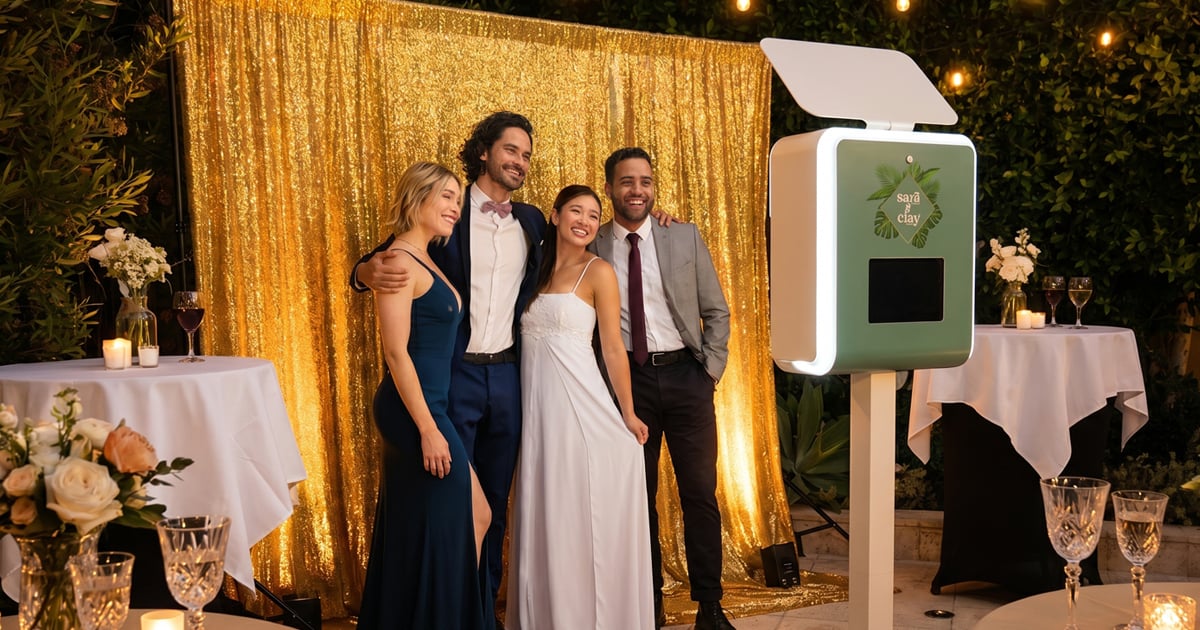
Every event producer who has worked with a photo activation vendor for the first time carries the same quiet anxiety
Go Shawty, It’s your Birthday
You will need a free Photo Party Upload account to access Virtual Booth. Once you’ve created your account, return to this page to complete the sign up process.
Already set up on Photo Party Upload? Watch this short video on how to get started.
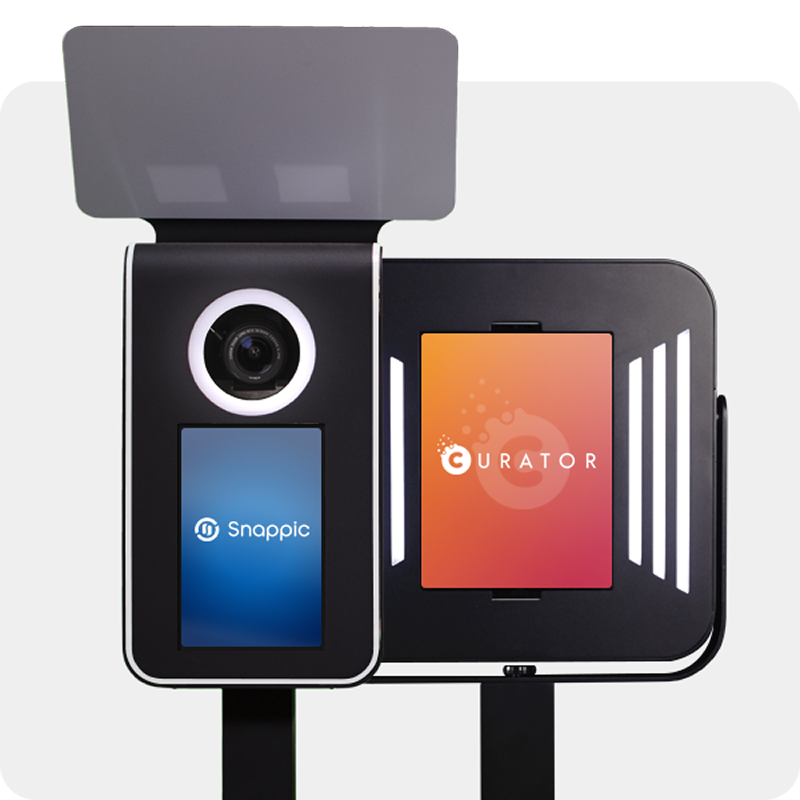
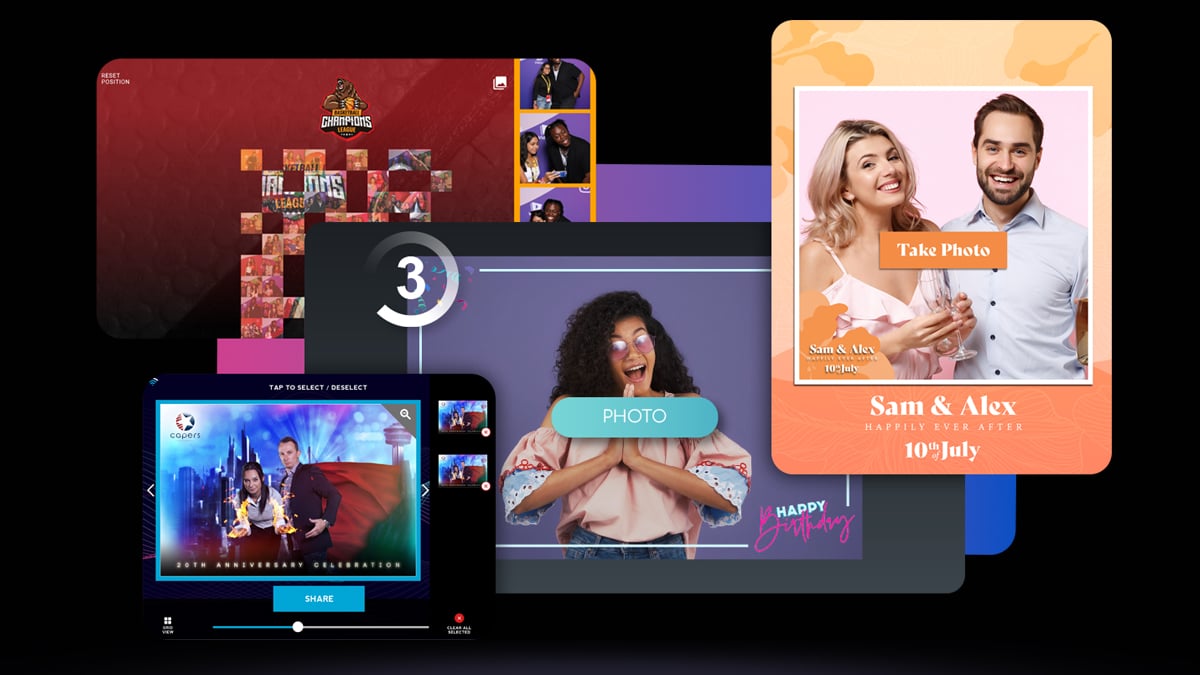
Venture Go and Explorer work with industry-leading iPad apps. We’ve partnered with two powerful platforms—each trusted by photo booth pros worldwide.
SELECT an app to learn more